Introduction
In the flat lowlands of the Amazon basin, rivers meander widely across the landscape. Over time, these dynamic loops are cut off from the main channel, forming crescent-shaped lakes known as oxbow lakes (locally called cochas) [1]. These calm, nutrient-rich water bodies become sanctuaries for a diverse array of aquatic birds, reptiles, and mammals, isolated from the fast-flowing main river.
The Prehistoric Hoatzin (Ophisthocomus hoazin)
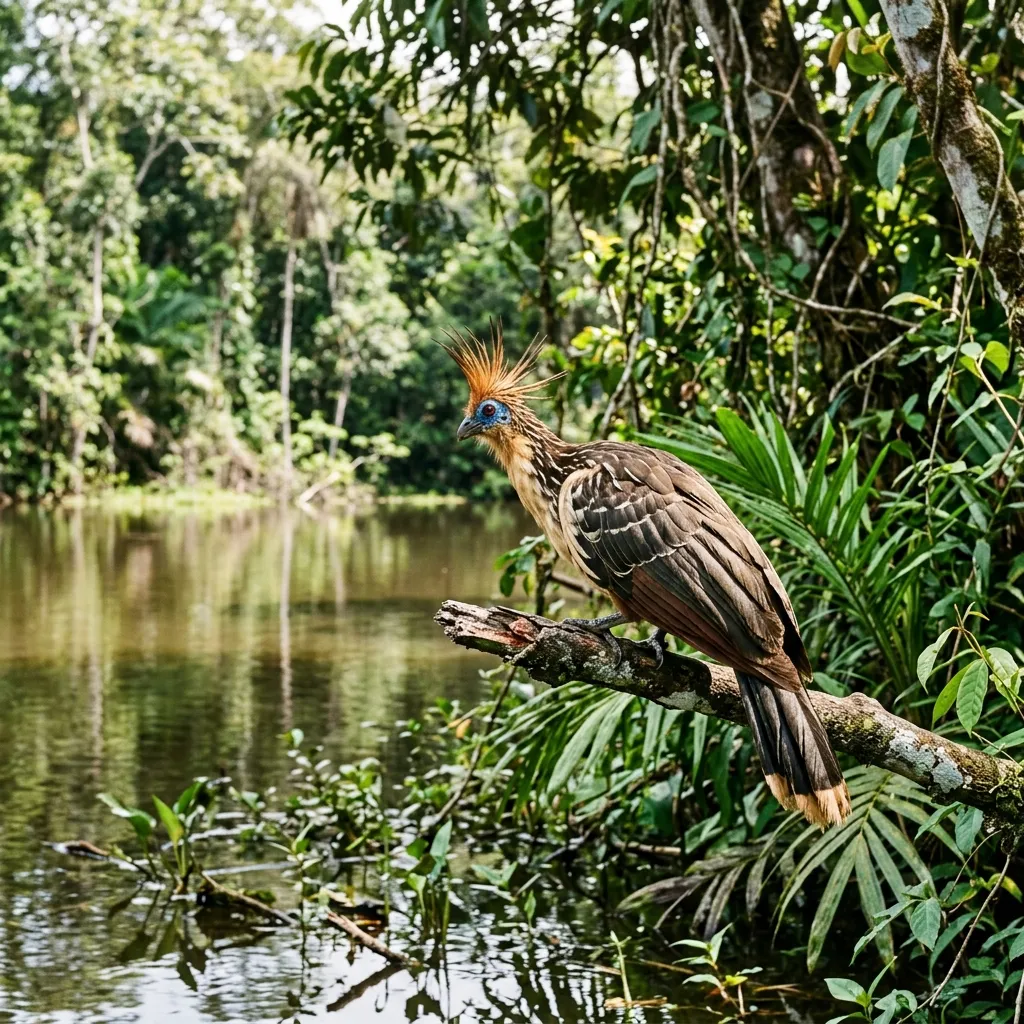
The most famous resident of Manu's oxbow lakes is the Hoatzin, often called the 'dinosaur bird'. These large, colorful birds gather in noisy groups in the vegetation overhanging the water. Because they feed primarily on leaves, they possess a massive, specialized crop where leaves are fermented by bacteria, similar to a cow's stomach. Nestlings have claws on their wings, which they use to climb back into branches if they drop into the lake to escape predators.
Stealth Hunters of the Margins
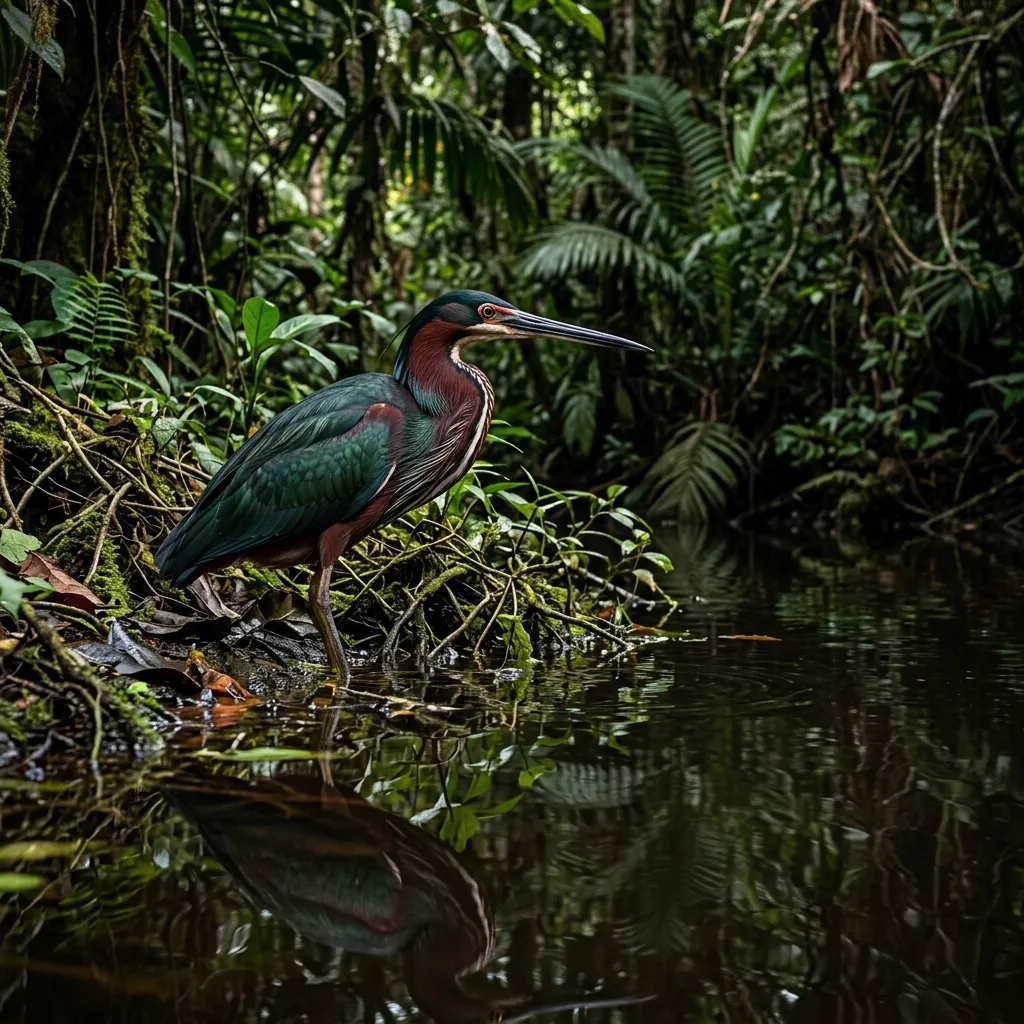
The quiet, vegetated shores of oxbow lakes are the preferred hunting grounds for several specialized piscivorous birds. The cryptic Agami Heron stalks silently in the shadows of flooded bushes, while the Sunbittern—famous for its dramatic wing patterns resembling massive eyes—walks along floating logs, searching for small fish and frogs. You can also spot the Rufescent Tiger-Heron and five distinct species of kingfishers.
Horned Screamers and Greater Anis
On the floating vegetation mats at the lake edges, you will often find the massive Horned Screamer (Anhima cornuta). Named for the long, slender cartilage horn projecting from its forehead and its loud, trumpeting calls, this turkey-like bird is actually closely related to ducks and geese. Large groups of Greater Anis, with their glossy black plumage and massive bills, are also common in these marshy habitats.
Catamaran Observation Tactics
To explore these sensitive habitats without disturbing the wildlife, visitors use large, non-motorized catamaran platforms propelled by paddles. These platforms glide silently over the water, allowing close-up views and photography of nesting birds and sunbathing Giant Otters. Early morning and late afternoon sessions offer the best light and highest levels of bird activity.
References & Scholarly Citations
- Terborgh, J. (1983). 'Five New World Primates: A Study of Comparative Ecology' (Context on Manu lowlands).
- Kushlan, J. A. (2005). 'The Herons' (Notes on Agami distribution).
- Schulenberg, T. S. (2010). 'Birds of Peru'. Princeton University Press.
Ready to Spot These Species?
Our custom birdwatching expeditions in Peru are designed for serious list keepers, photographers, and nature lovers alike. Join our small groups guided by top Peruvian ornithologists.
Inquire About Our Tours