Taxonomy: The Enigmatic Opisthocomiformes Family
The Hoatzin (Opisthocomus hoazin) is one of the most phylogenetically isolated bird species on Earth. It is the sole surviving member of the family Opisthocomidae and the monotypic order Opisthocomiformes. For over two centuries, taxonomists vigorously debated whether the Hoatzin belonged to the cuckoos, gamebirds, turacos, or seriemas. Recent high-resolution genomic phylogenetics reveals that the Hoatzin represents an ancient lineage that diverged shortly after the Cretaceous-Paleogene extinction event over 64 million years ago.
Wing Claws in Chicks: Living Dinosaur Traits
One of the Hoatzin's most famous evolutionary features is the presence of functional wing claws on juvenile birds. Chicks hatch with two prominent, sharp claws on the first and second digits of each wing. Because nests are constructed on overhanging branches directly above oxbow lakes, threatened chicks dive into the water to escape predators, swim underwater using their wings, and then use their wing claws and bill to scramble back up tangled vines and branches into the nest. The claws regress as the bird matures and develops adult flight feathers.
Folivorous Digestion: The 'Stinkbird' Fermentation Chamber
The Hoatzin is the only known bird on Earth that utilizes a specialized foregut fermentation system analogous to ruminant mammals like cows and sheep [3]. An immensely enlarged crop and lower esophagus contain symbiotic anaerobic bacteria that ferment cellulose and detoxify tough, fibrous leaves of arum plants (Montrichardia arborescens). Because the giant crop occupies most of the bird's chest cavity, flight muscles and the breastbone keel are severely reduced, making Hoatzins clumsy, short-distance flyers. The active fermentation process emits a pungent, manure-like odor, earning the bird its widespread nickname, the 'stinkbird'.
Oxbow Lake Habitats and Viewing in Manu
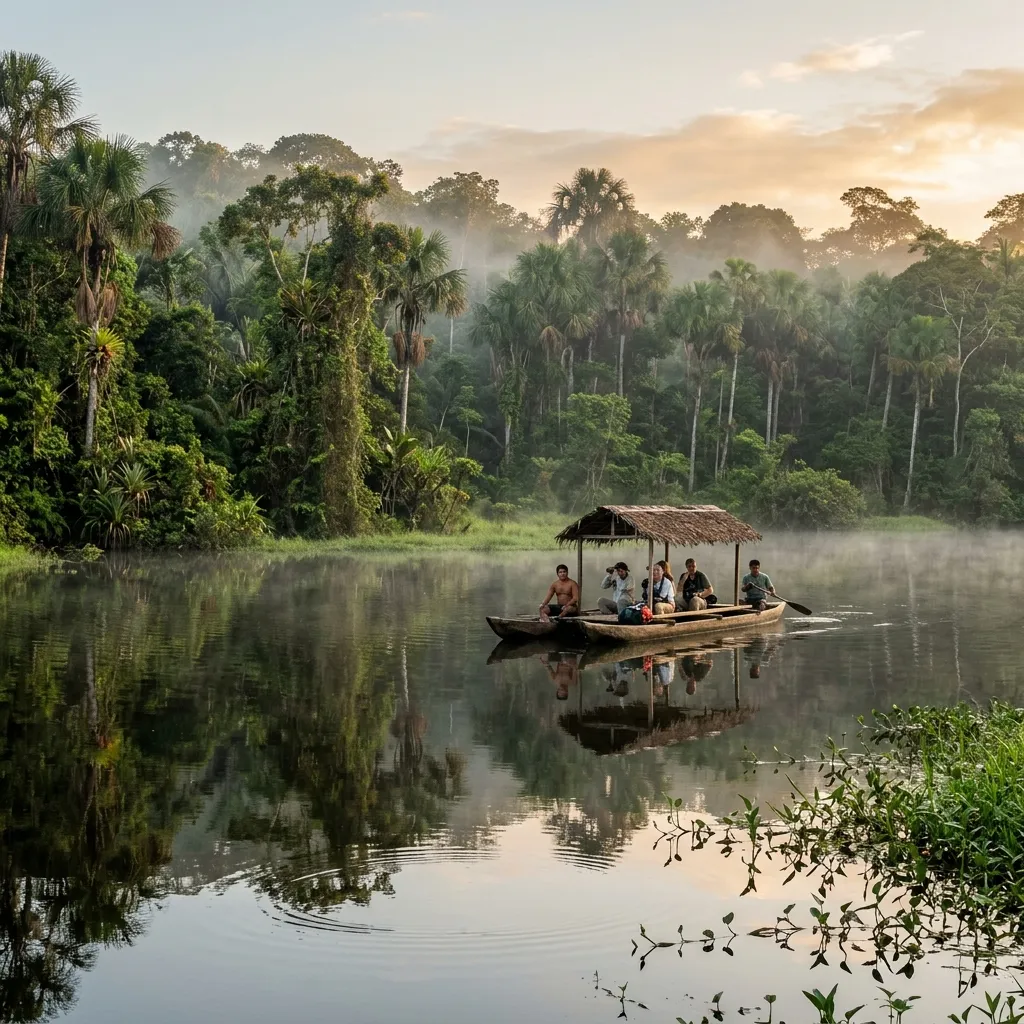
In Manu National Park, Hoatzins are abundant along the vegetated fringes of ancient oxbow lakes (cochas) like Cocha Salvador and Cocha Otorongo. Birdwatchers cruising silently aboard stable catamarans can observe family groups clambering through lakeside arum vegetation, emitting distinctive wheezing, grunting, and hissing vocalizations while sunning their expansive rufous-fringed wings.
References & Scholarly Citations
- BirdLife International (2020). 'Opisthocomus hoazin'. IUCN Red List of Threatened Species.
- Grajal, A., et al. (1989). 'Foregut Fermentation in the Hoatzin, a Folivorous Neotropical Bird'. Science.
- Hughes, J. M. (2020). 'Evolutionary Biology of the Hoatzin'. Journal of Avian Biology.
Ready to Spot These Species?
Our custom birdwatching expeditions in Peru are designed for serious list keepers, photographers, and nature lovers alike. Join our small groups guided by top Peruvian ornithologists.
Inquire About Our Tours
Social Structure and Cooperative Breeding
Hoatzins live in tight-knit social groups of 2 to 10 individuals that defend communal territories along river margins. They exhibit complex cooperative breeding behavior: non-breeding older offspring assist the primary breeding pair by defending the territory, incubating eggs, regurgitating fermented leaf paste for nestlings, and guarding chicks against raptors, monkeys, and black caimans.