Introduction
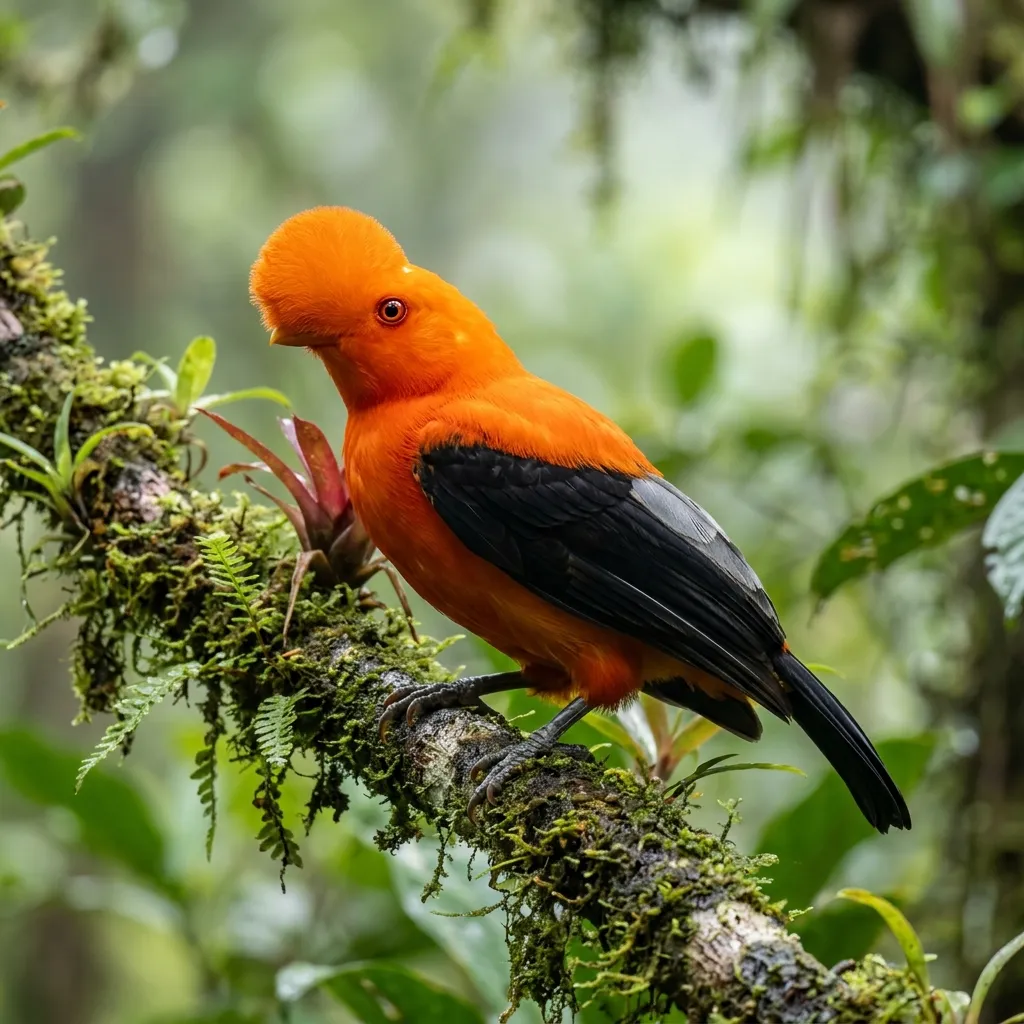
The Golden-headed Quetzal (Pharomachrus auriceps) is one of the most beautiful and iconic birds of the Andean cloud forests. Belonging to the trogon family, its iridescent green plumage, red underbelly, and golden-yellow head make it a spectacular sight. Within Manu National Park, they are excellent indicators of healthy, mature cloud forest ecosystems [2].
Morphology and Plumage
Measuring roughly 33 to 36 cm, this medium-sized bird displays striking coloration. Males have an iridescent green back and chest, which shifts from blue-green to gold depending on the light. The lower belly is a brilliant crimson-red, and the head features a soft, velvety golden-bronze crest. Females are similar but have a browner head and a grey upper breast.
Diet and Feeding Behavior
Quetzals are specialized fruit eaters, feeding primarily on the fruits of wild avocados (Lauraceae) and other canopy trees. They fly out from a perch to snatch the fruits in mid-air, swallowing them whole and regurgitating the large seeds, which helps disperse tree species throughout the steep slopes. They also consume insects, particularly during the breeding season.
Breeding and Nesting Habits
During the nesting season (typically March to June), pairs construct nests inside decaying tree trunks, often modifying old woodpecker cavities. Both parents share the incubation duties and feed the chicks. The nesting cycle is highly dependent on mature forest structure, as they require large, dead standing trees to excavate their nesting holes.
Where to Observe Them in Manu
The wet forests surrounding the Wayqecha Biological Station and the mid-elevation trails of San Pedro are the best spots to find them. Listen for their distinctive, repeating mournful hooting call, which can carry over long distances through the mist. Look for them perching quietly in the mid-canopy of fruiting trees.
References & Scholarly Citations
- BirdLife International (2020). 'Pharomachrus auriceps'. IUCN Red List of Threatened Species.
- Schulenberg, T. S. (2010). 'Birds of Peru'. Princeton University Press.
- Collar, N. J. (2001). 'Family Trogonidae (Trogons)'. Handbook of the Birds of the World.

Ready to Spot These Species?
Our custom birdwatching expeditions in Peru are designed for serious list keepers, photographers, and nature lovers alike. Join our small groups guided by top Peruvian ornithologists.
Inquire About Our Tours