The Phenomenon of Avian Endemism in Peru
With more than 105 bird species found nowhere else on Earth, Peru ranks second in the world for avian endemism, trailing only the vast archipelago of Indonesia [1]. This astounding concentration of unique birds is produced by extreme topographic relief, ancient glacial cycles, and profound geographical barriers like the Marañón River canyon and the Apurímac Valley. These micro-habitats have fostered millions of years of isolated evolutionary divergence.
Flagship Endemic Hummingbirds
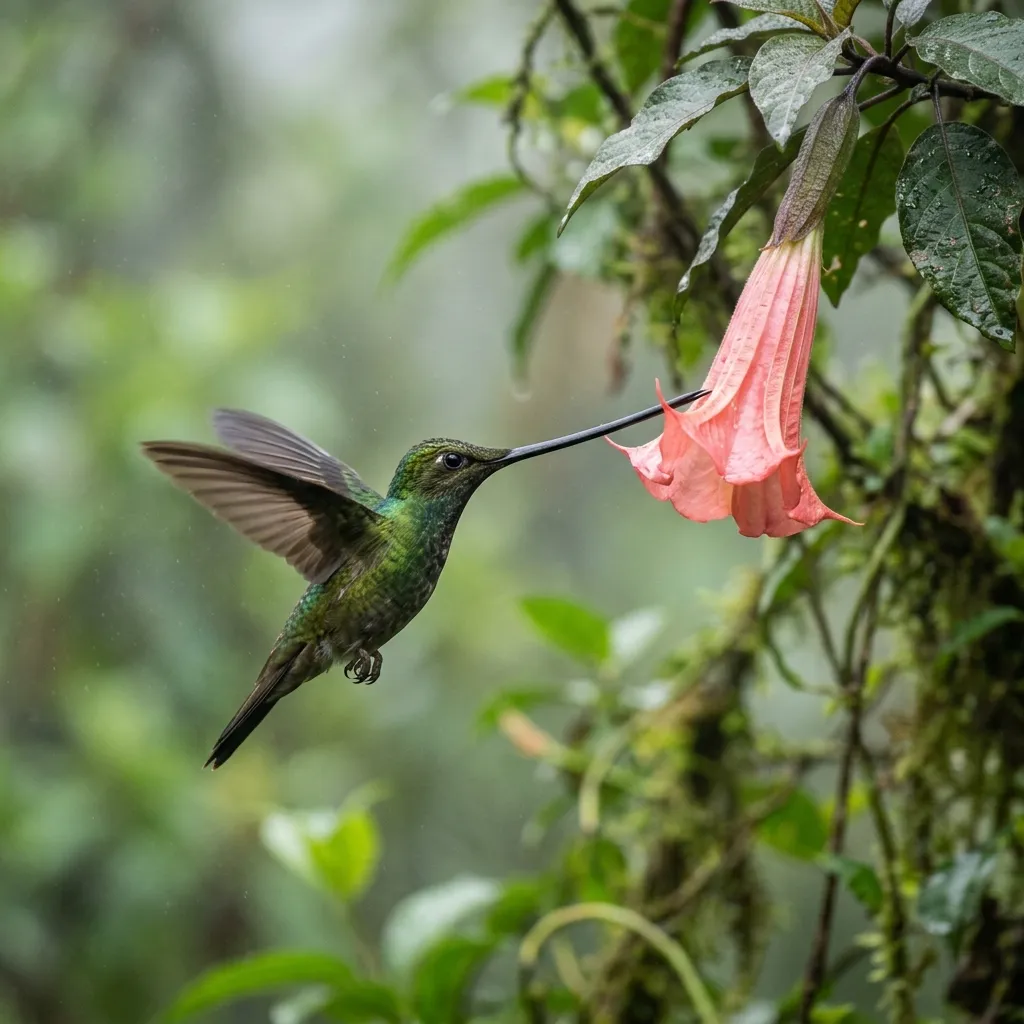
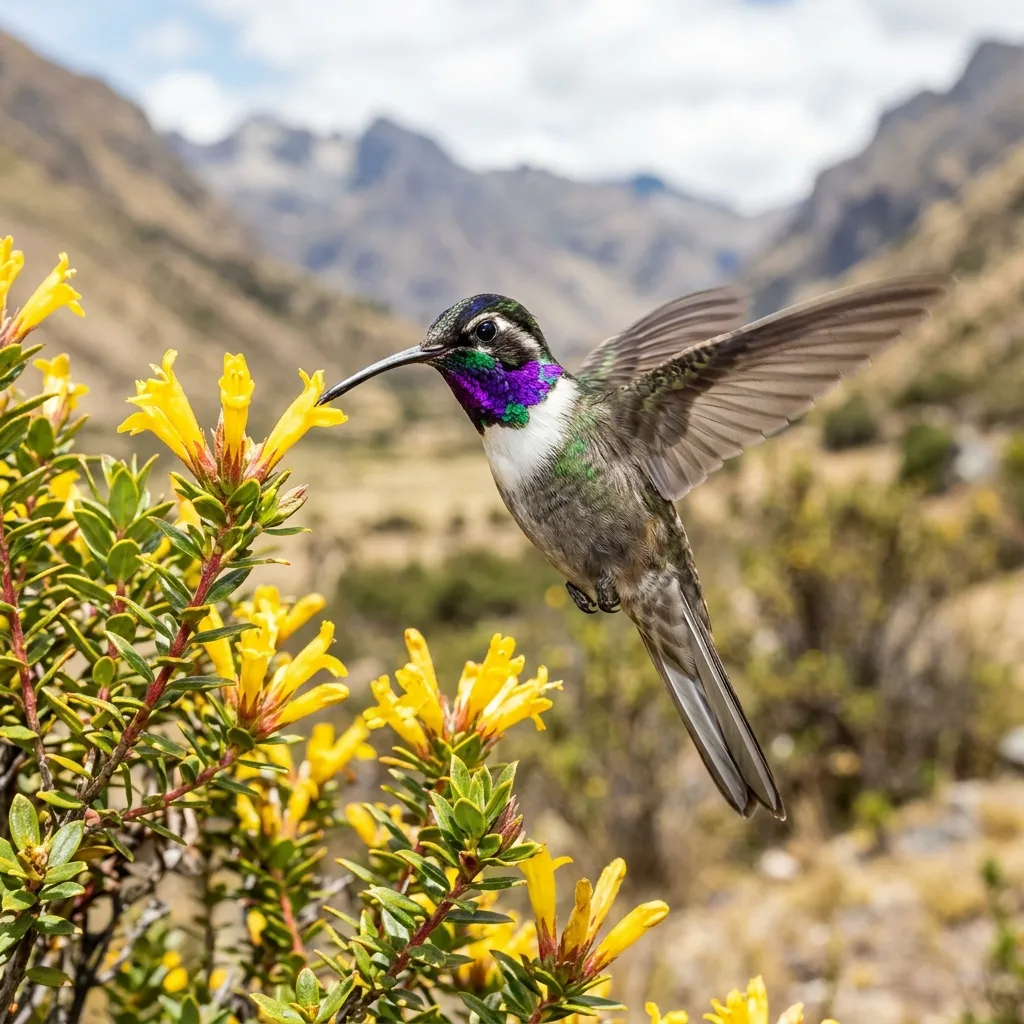
Peru's endemic hummingbirds are among the most celebrated birds in global ornithology. The Marvelous Spatuletail (Loddigesia mirabilis) in Amazonas showcases twin racquet-shaped tail spatules, while the Bearded Mountaineer (Oreonympha nobilis) frequents flowering tobacco and agave plants in the dry inter-Andean valleys around Cusco and the upper Manu watershed. Other spectacular endemic hummingbirds include the Peruvian Piedtail, Black-metaltail, and the critically localized Royal Sunangel.
Critically Endangered Endemics: Junín Grebe & White-winged Guan
Several of Peru's endemics survive in precarious populations requiring intensive conservation action. The flightless Junín Grebe (Podiceps taczanowskii) is restricted exclusively to Lake Junín at 4,080 meters elevation, threatened by mining runoff and fluctuating water levels [2]. On the Pacific slope, the White-winged Guan (Penelope albipennis) inhabits dry forested ravines in Lambayeque and Piura, where captive breeding and community reserves have stabilized wild numbers to roughly 300 individuals.
Marañón Valley & Tumbesian Endemic Complexes
The arid Marañón river valley in northern Peru is an evolutionary speciation engine, harboring a suite of restricted endemics including the Marañón Thrush, Buff-bridled Inca-Finch, Chestnut-backed Thornbird, and Yellow-faced Parrotlet. To the west, the Tumbesian dry forests support the localized Peruvian Plantcutter (Phytotoma raimondii), known for its serrated bill used for cropping spiny desert leaves.
Cloud Forest & Foothill Endemics of the Eastern Slope
Along the mist-shrouded eastern slopes of the Andes, vertical habitat zonation supports dozens of localized cotingas, tanagers, and antpittas. In southern Peru near Manu, birders seek the endemic Inca Wren (Pheugopedius eisenmanni), Cuzco Brushfinch, and Unstreaked Tit-Tyrant. In central Peru, the legendary Carpish Pass and Satipo Road shelter the Golden-backed Mountain-Tanager, Bay Antpitta, and Pardusco.
Conservation Challenges and Community Reserves
Preserving Peru's endemic birds requires safeguarding critical Endemic Bird Areas (EBAs) against deforestation, agricultural expansion, and climate-induced elevational shifts. Initiatives led by Peruvian conservation groups such as ECOAN and ProAves, alongside indigenous communities, have established private conservation areas (ACPs) that provide vital habitat corridors while generating sustainable eco-tourism revenue.
References & Scholarly Citations
- Stattersfield, A. J., et al. (1998). 'Endemic Bird Areas of the World: Priorities for Biodiversity Conservation'. BirdLife International.
- Fjeldså, J., & Krabbe, N. (1990). 'Birds of the High Andes'. Zoological Museum, University of Copenhagen.
- Schulenberg, T. S., et al. (2010). 'Birds of Peru'. Princeton University Press.

Ready to Spot These Species?
Our custom birdwatching expeditions in Peru are designed for serious list keepers, photographers, and nature lovers alike. Join our small groups guided by top Peruvian ornithologists.
Inquire About Our Tours