Overview of the Northern Peru Birding Circuit
While southern Peru is celebrated for the vast wilderness of Manu, Northern Peru is the global holy grail for rare and endemic bird species [1]. Crossing four departments—Lambayeque, Cajamarca, Amazonas, and San Martín—this route traverses dramatic geographical barriers: the dry Pacific coastal desert, the deep Marañón river canyon, and the stunted elfin cloud forests of the Cordillera de Colán. It holds one of the highest concentrations of localized, range-restricted birds on the planet.
The Marvelous Spatuletail at Huembo Center
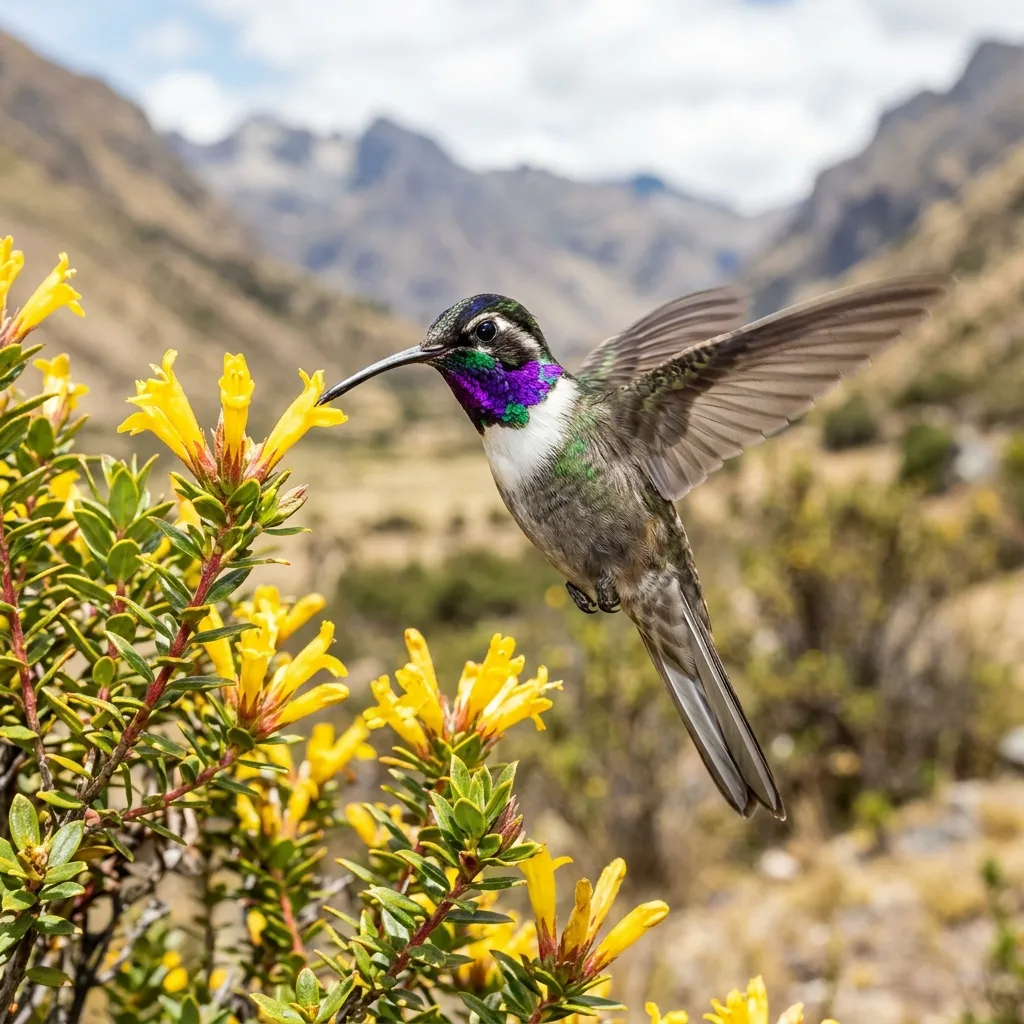
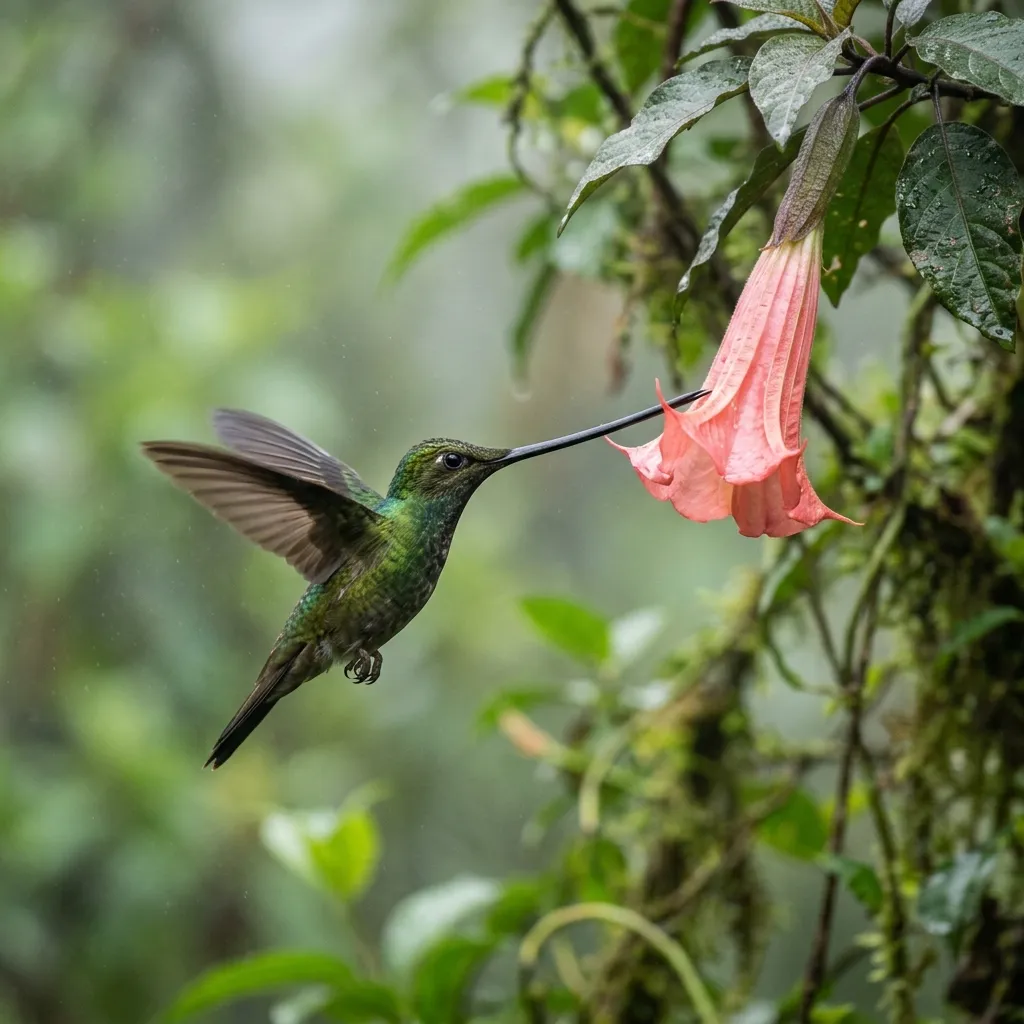
The undisputed icon of northern Peru is the Marvelous Spatuletail (Loddigesia mirabilis), widely considered the most extraordinary hummingbird in the world. Restricted entirely to the Utcubamba River basin in Amazonas, adult males possess only four tail feathers, two of which are elongated rackets ending in large, iridescent violet-purple spatules. At the community-managed Huembo Hummingbird Center near Pomacochas, specialized verbena feeding stations allow birders to observe male courtship displays and sparring with Chestnut-breasted Coronets and White-bellied Woodstars.
Abra Patricia Reserve: Elfin Cloud Forest Stronghold
Located along the eastern Andean ridge at 2,200 meters elevation, the Abra Patricia Private Conservation Area (Owlet Lodge) protects high-altitude cloud forest and elfin ridge forests. It is famous worldwide as the home of the enigmatic Long-whiskered Owlet (Xenoglaux loweryi), one of the world's smallest and most unique owls, discovered only in 1976 [2]. Other flagship species along Abra Patricia's mossy trails include the Ochre-fronted Antpitta, Lulu's Tody-Flycatcher, Royal Sunangel, and Johnson's Tody-Tyrant.
The Marañón Valley: Evolutionary Speciation Island
The deep, rain-shadow canyon of the Marañón River acts as a dramatic biogeographical barrier isolating the northern Andes. This isolated valley has catalyzed intense speciation, producing a remarkable cluster of endemic dry-forest birds. Essential target endemics in the Marañón basin include the Marañón Thrush, Chestnut-backed Thornbird, Yellow-faced Parrotlet, Buff-bridled Inca-Finch, and the Little Slaty Antshrike.
Tumbesian Endemics: Bosque de Pómac & Chaparrí
Descending westward to the Pacific slope, the dry Tumbesian scrub and carob forests of Lambayeque harbor a specialized avian community. Key reserves like the Bosque de Pómac Historical Sanctuary and Chaparrí Ecological Reserve protect the critically endangered White-winged Guan (Penelope albipennis), once thought extinct for nearly a century before its dramatic rediscovery. Other Tumbesian targets include the Peruvian Plantcutter, Rufous Flycatcher, and Tumbes Swallow.
Suggested 12-Day Northern Peru Itinerary
A standard Northern Peru birding itinerary commences in Chiclayo or Tarapoto: Days 1–2: Coastal desert & Chaparrí (White-winged Guan); Days 3–4: Jaén & Marañón dry scrub (Inca-finches); Days 5–6: Utcubamba Valley & Huembo (Marvelous Spatuletail); Days 7–9: Abra Patricia & Afluente (Long-whiskered Owlet & tanagers); Days 10–12: Tarapoto foothills (Koepcke's Hermit & Oilbirds) [3].
References & Scholarly Citations
- Valqui, T. (2004). 'Where to Watch Birds in Peru'. Ediciones Gráficas.
- O'Neill, J. P., & Graves, G. R. (1977). 'A new genus and species of owl (Aves: Strigidae) from Peru'. The Auk.
- Schulenberg, T. S., et al. (2010). 'Birds of Peru'. Princeton University Press.

Ready to Spot These Species?
Our custom birdwatching expeditions in Peru are designed for serious list keepers, photographers, and nature lovers alike. Join our small groups guided by top Peruvian ornithologists.
Inquire About Our Tours