Why Peru is the Global Capital for Hummingbird Photography
Peru is home to more than 130 recognized hummingbird species, representing over one-third of the world's total trochilid family [1]. Across Peru's protected reserves and eco-lodges, dedicated hummingbird feeder gardens and verbena corridors have been established. These stations allow birders and wildlife photographers to observe high-speed hovering, territorial jousting, and brilliant iridescence up close without disturbing wild foraging cycles.
Top 5 Hummingbird Feeder Stations in Northern Peru
Northern Peru features some of the most specialized feeder gardens on Earth:
1. Huembo Hummingbird Center (2,000 m, Amazonas): The premier global hotspot for the Marvelous Spatuletail (Loddigesia mirabilis), along with Chestnut-breasted Coronets and White-bellied Woodstars.
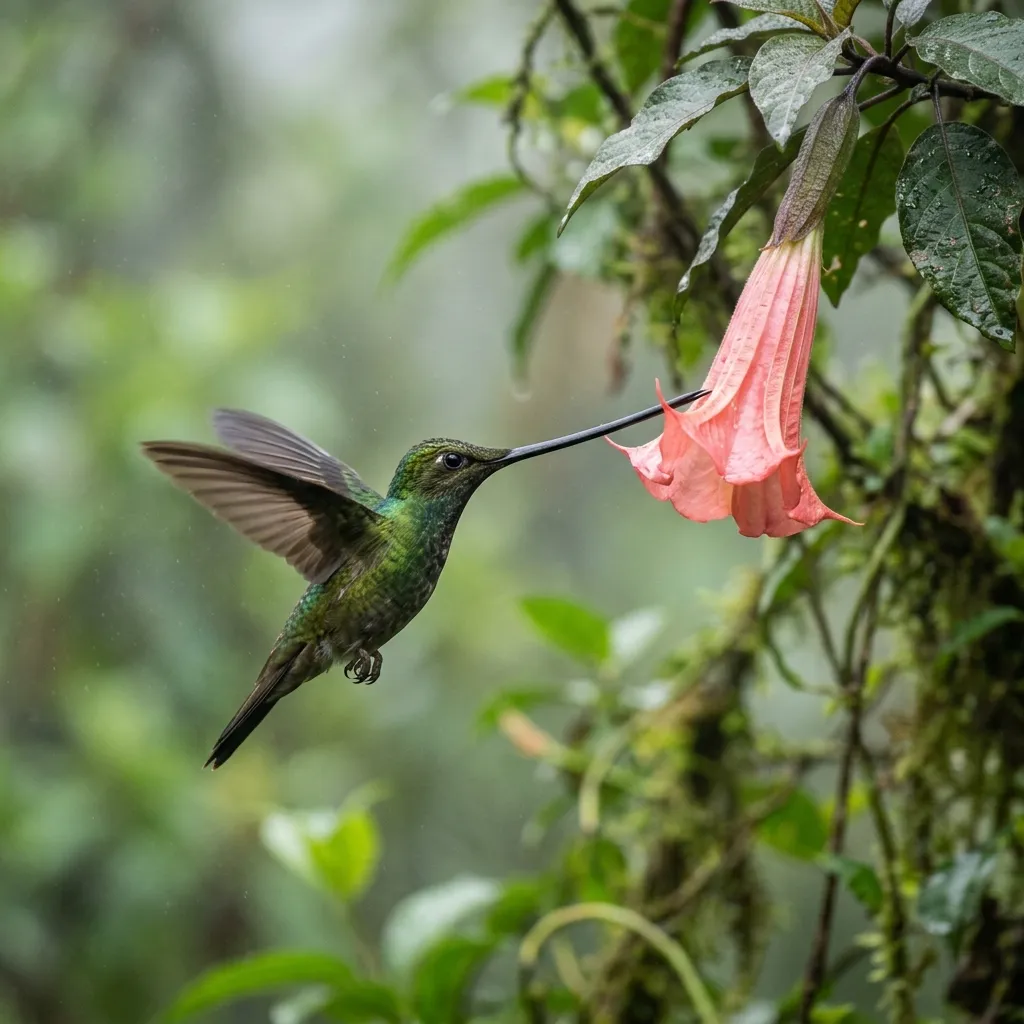
2. Abra Patricia Owlet Lodge (2,200 m, San Martín): Renowned for high cloud forest species including the Royal Sunangel, Emerald-bellied Puffleg, and Sword-billed Hummingbird.
3. Arena Blanca Reserve (950 m, San Martín): Famous for Rufous-crested Coquette, Wire-crested Thorntail, and tinamou feeding stations.
4. Afluente Feeders (1,400 m): Excellent for Ecuadorian Piedtail and Green Hermit.
5. Wakanki Lodge (900 m, Moyobamba): Over 25 hummingbird species recorded around blooming verbena gardens, including Rufous-crested Coquette.
Top 5 Hummingbird Feeder Stations in Southern Peru & Manu
Along the famous Manu altitudinal transect in southern Peru, feeder stations span dramatic elevation zones:
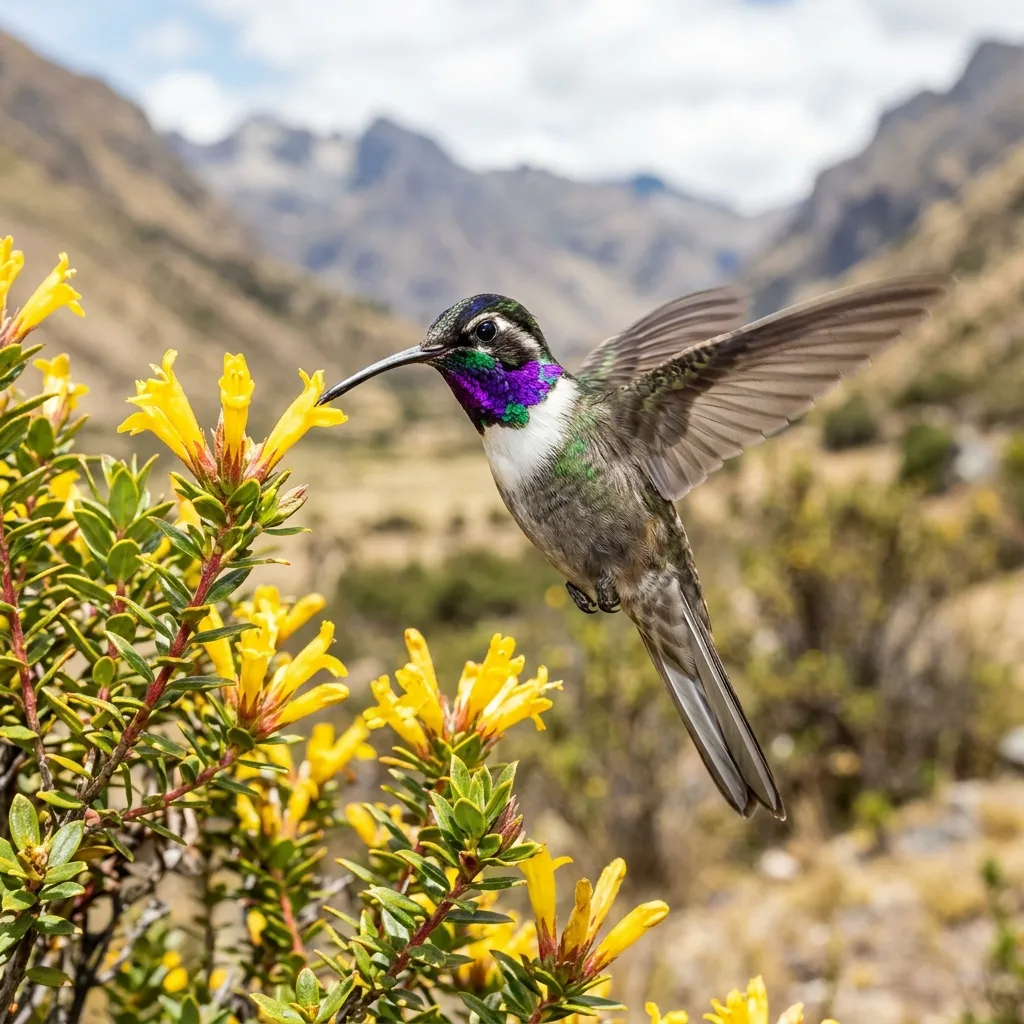
1. Wayqecha Cloud Forest Station (2,900 m): High Andean feeders attracting Gould's Inca, Violet-throated Starfrontlet, Amethyst-throated Sunangel, and Tyrian Metaltail.
2. Cock-of-the-Rock Lodge at San Pedro (1,400 m): Subtropical garden bustling with Wire-crested Thorntails, Booted Racket-tails, and Speckled Hummingbirds.
3. Villa Carmen Biological Station (550 m): Foothill feeders featuring Rufous-breasted Hermit and White-necked Jacobin.
4. Amazonia Lodge (500 m): Veranda feeders boasting over 30 hummingbird species, including Gould's Jewelfront, Rufous-webbed Brilliant, and Koepcke's Hermit.
5. Ensifera Camp (Cusco High Andes, 3,400 m): The ultimate photo station for the extraordinary Sword-billed Hummingbird (Ensifera ensifera) and Giant Hummingbird.
Recommended Camera Settings for Hummingbird Feeder Photography
To freeze the rapid wingbeats of hummingbirds (flapping 50 to 80 times per second), photographers should set their shutter speed to at least 1/2000s to 1/4000s with a wide aperture (f/4 or f/5.6) and auto-ISO. Using multi-flash high-speed setups (4 to 5 synchronized wireless flashes set to 1/16 or 1/32 power) illuminates the full iridescent structural colors of gorgets and crowns without harsh shadows.
References & Scholarly Citations
- Schuchmann, K. L. (1999). 'Family Trochilidae (Hummingbirds)'. Handbook of the Birds of the World.
- Schulenberg, T. S., et al. (2010). 'Birds of Peru'. Princeton University Press.
- Valqui, T. (2004). 'Where to Watch Birds in Peru'. Ediciones Gráficas.
Ready to Spot These Species?
Our custom birdwatching expeditions in Peru are designed for serious list keepers, photographers, and nature lovers alike. Join our small groups guided by top Peruvian ornithologists.
Inquire About Our Tours