Why Southeastern Peru Is the Macaw Clay Lick Capital of the World
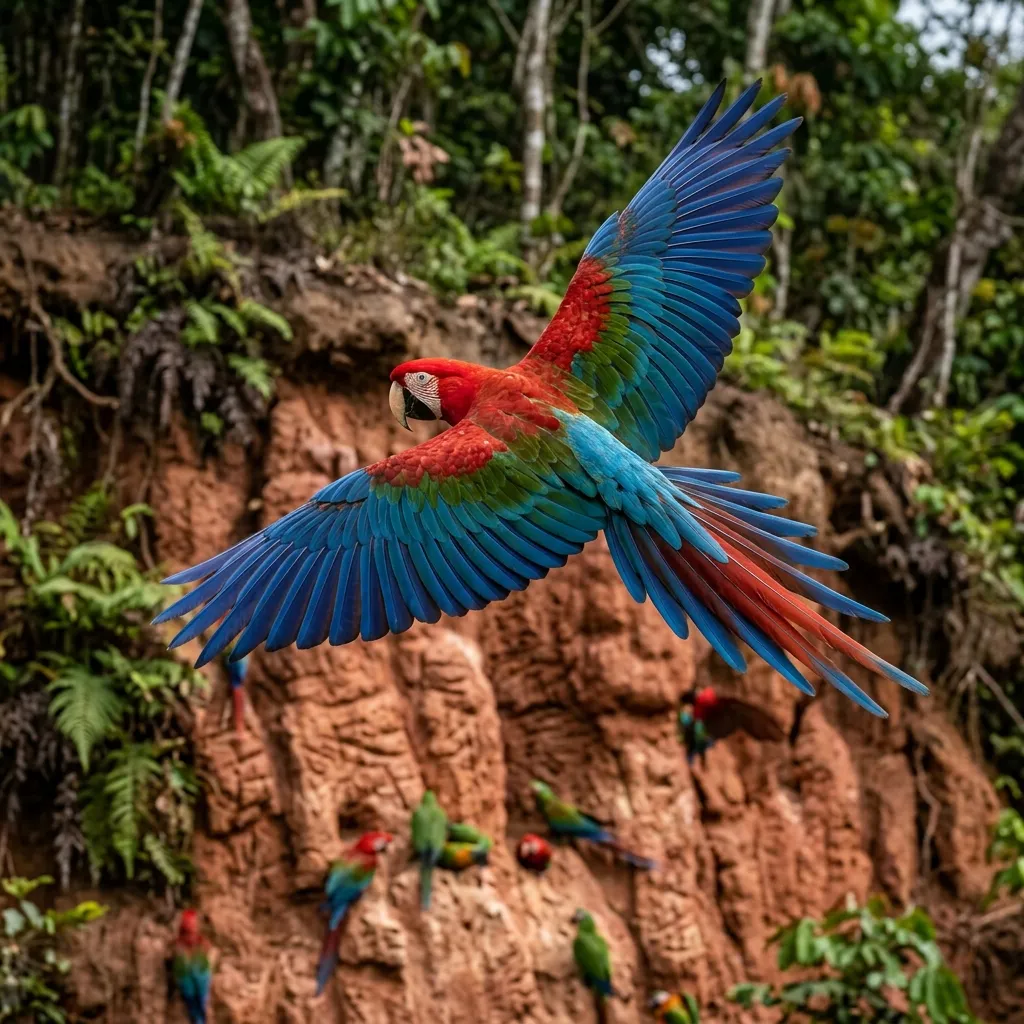
Nowhere on Earth do parrots and macaws gather in greater spectacles of color and sound than at the riverine macaw clay licks—known in Peru by the Quechua word colpas (or collpas)—of the Manu and Madre de Dios (Tambopata) watersheds in southeastern Peru. On a clear dry-season morning, up to 15 species of parrots, parakeets, and large Ara macaws descend in swirling crimson, emerald, and gold clouds onto vertical river cliffs to gnaw fine mineral clay.
This phenomenon is geographically concentrated in the western Amazon basin of Peru because the region sits 2,500 kilometers upwind from the Atlantic Ocean; heavy rain leaches sodium out of the soil, leaving plant seeds and fruits severely deficient in dietary salt while high in toxic defensive alkaloids. Eroding riverbanks expose ancient sodium-rich smectite clay seams that sustain the entire psittacid and herbivore community.
Blanquillo (Manu) vs Chuncho vs Colorado (Tambopata): Full Comparison Table
Choosing the right clay lick depends on whether your priority is close-up full-frame photography from a blind, sheer flock size, or integrating a clay lick into a 1,000-species Manu transect:
| Macaw Clay Lick (Colpa) | Reserve & River | Viewing Distance & Setup | Dominant Macaw & Parrot Species | Best For |
|---|---|---|---|---|
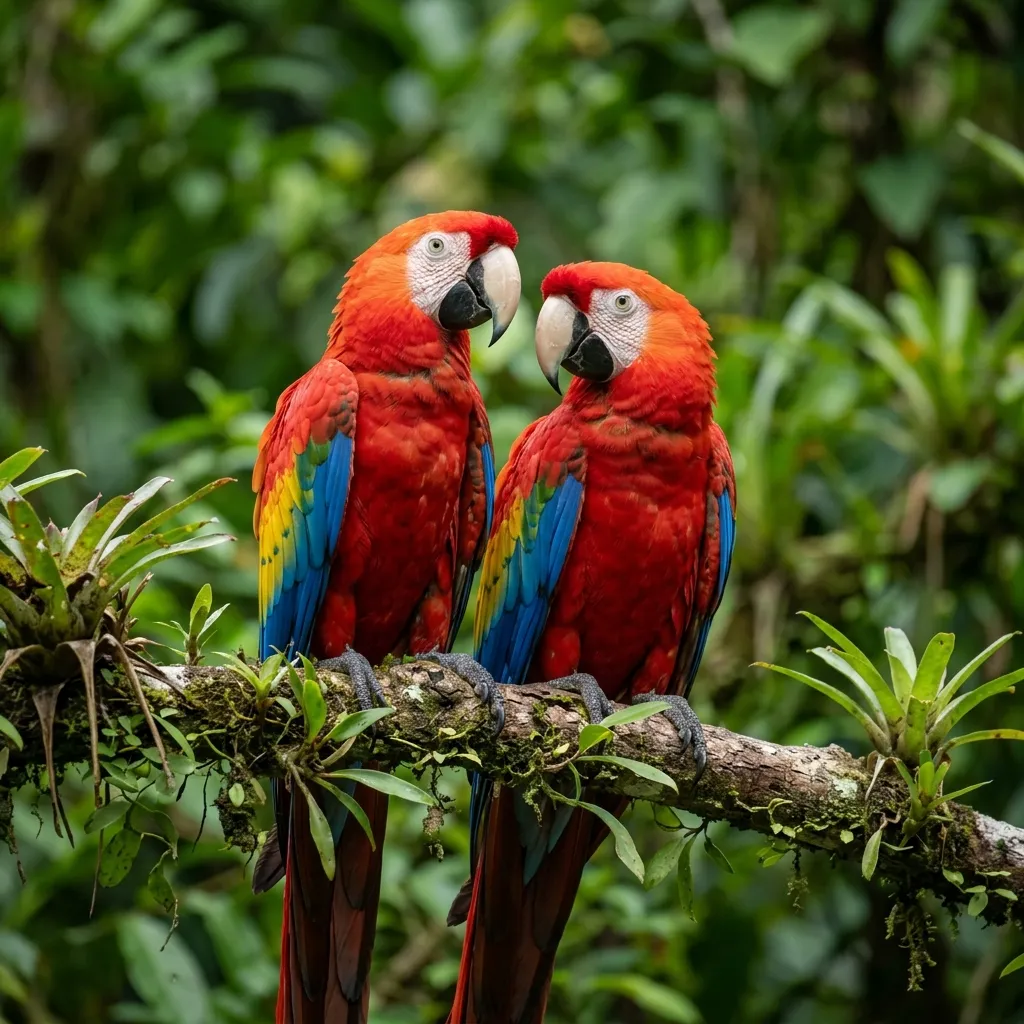
| Collpa Blanquillo | Manu Biosphere Reserve (Madre de Dios River) | 40–60 meters from enclosed floating catamaran & elevated blind | Red-and-green Macaw (80–150+), Scarlet Macaw, Blue-headed, Mealy & Orange-cheeked Parrots, Dusky-headed Parakeet | Best close-range photography + full Manu Andean-to-Amazon birding transect |
| Collpa Chuncho | Tambopata National Reserve (Upper Tambopata River) | 120–180 meters from open gravel river beach across channel | Scarlet Macaw, Red-and-green Macaw, Blue-and-yellow Macaw (all 3 large Ara species together), White-eyed Parakeet | Easy 3–4 day fly-in access from Puerto Maldonado & seeing all 3 large macaws |
| Collpa Colorado | Tambopata Core Zone (Upper Tambopata) | 150–250 meters from riverside observation point (500 m cliff wall) | Scarlet, Red-and-green, Blue-and-yellow, Chestnut-fronted, Red-bellied & Blue-headed Macaws | Largest physical cliff wall & research history (Tambopata Macaw Project) |
| Collpa Cachuela / Posada | Lower Madre de Dios / Tambopata Buffer | 50–80 meters from riverbank blind | Cobalt-winged Parakeet, Dusky-headed Parakeet, Mealy Parrot, Chestnut-fronted Macaw | Quick morning parakeet & small macaw action near Puerto Maldonado |
The Dawn Sequence: How a Clay Lick Morning Unfolds
Every Amazonian clay lick follows a strict, predator-driven chronological hierarchy at sunrise:
- 5:30 AM – 6:10 AM (Canopy Staging): Birders arrive silently in darkness and enter the blind. First to arrive in the overhanging cecropia and bobinsana trees are hundreds of small Tui Parakeets, Cobalt-winged Parakeets, Dusky-headed Parakeets, Blue-headed Parrots, Orange-cheeked Parrots, and Mealy Parrots, filling the air with deafening chatter.
- 6:15 AM – 7:00 AM (The Small Parrot Rush): Once sentinel birds confirm no Ocelot, Tayra, or Ornate Hawk-Eagle is waiting on the cliff lip, an emerald wave of hundreds of parakeets and Amazona parrots drops onto the upper clay seam.
- 7:00 AM – 9:00 AM (The Giant Macaw Descent): Mated pairs and family trios of Red-and-green Macaws (Ara chloropterus), Scarlet Macaws (Ara macao), and Blue-and-yellow Macaws (Ara ararauna) cautiously work their way down overhanging vines before landing on the vertical sodium-rich clay bands. If a Great Black Hawk or Roadside Hawk flies past, 200+ macaws explode off the cliff simultaneously in a thunderous crimson vortex before circling back to resume feeding.
Photography & Lens Settings for Macaw Clay Licks
Because macaw clay licks face east or northeast to catch the first rays of morning sun—and because flight bursts happen without warning—dial in these proven field settings:
- At Blanquillo (40–60 m distance): A 100–500mm or 200–600mm zoom is ideal so you can zoom out to 150–200mm for wide-angle "red cloud" flock explosions and zoom in to 500–600mm for tight portraits of Red-and-green Macaws biting clay.
- At Chuncho or Colorado (120–200 m distance): Bring a 500mm or 600mm prime with a 1.4x teleconverter, plus a quality spotting scope with a phone-scoping adapter.
- Exposure Triangle: As soon as direct sunlight hits the red cliff around 6:45 AM, switch to Manual mode at 1/2500s to 1/3200s, f/5.6 to f/7.1, Auto ISO, with -0.3 to -0.7 EV exposure compensation so the intense scarlet and yellow plumage highlights never clip.
Frequently Asked Questions
Which is better: Blanquillo Macaw Clay Lick (Manu) or Chuncho Clay Lick (Tambopata)?
Blanquillo in Manu offers much closer viewing (40–60 meters from a camouflaged floating catamaran blind vs 150+ meters across the river at Chuncho), making Blanquillo superior for frame-filling photography and part of a 1,000-species Manu expedition. Chuncho is better if you only have 3 to 4 days and want to fly in and out of Puerto Maldonado to see Scarlet, Red-and-green, and Blue-and-yellow Macaws together.
What months are best for macaw clay licks in Peru?
The peak season for macaw clay licks in Peru is the dry and late-dry breeding season from July through October (especially August, September, and October), when dry weather and chick provisioning drive maximum daily macaw attendance.
What happens if it rains in the morning at a macaw clay lick?
Macaws and parrots rarely descend to the clay wall during heavy rain because wet feathers slow their escape from eagles and falcons. That is why our itineraries schedule two consecutive mornings near the clay lick to maximize the odds of a clear, sunny morning.
Do mammals also visit Amazon clay licks in Peru?
Yes! While macaws and parrots use exposed riverside cliffs at dawn, forest interior mammal clay licks (such as the Tambo Blanquillo and Manu Wildlife Center tapir clay licks) attract Brazilian Tapir, White-lipped Peccary, Red Brocket Deer, and Venezuelan Red Howler Monkeys, alongside Piping Guan and Spix's Guan.
References & Scholarly Citations
- Brightsmith, D. J., Taylor, J., & Phillips, T. D. (2008). The roles of soil characteristics and toxin adsorption in avian geophagy. Biotropica, 40(6), 766-774.
- Lee, A. T. K., Kumar, S., Brightsmith, D. J., & Marsden, S. J. (2010). Parrot claylick distribution in South America: do patterns of 'where' help answer 'why'? Ecography, 33(3), 503-513.
- Powell, L. L., Powell, T. U., Powell, G. V., & Brightsmith, D. J. (2009). Parrots take it with a grain of salt: available sodium content may drive collpa (clay lick) selection in southeastern Peru. Biotropica, 41(3), 279-282.
Ready to Spot These Species?
Our custom birdwatching expeditions in Peru are designed for serious list keepers, photographers, and nature lovers alike. Join our small groups guided by top Peruvian ornithologists.
Inquire About Our Tours