Combining World-Class Inca Heritage with High-Endemic Andean Birding
Not only is Cusco and the Historic Sanctuary of Machu Picchu South America's premier archaeological destination, it is also one of the richest Endemic Bird Areas (EBAs) in the Neotropics. Over 440 bird species have been recorded inside the 32,592-hectare Machu Picchu sanctuary alone, while the adjacent Sacred Valley, Abra Málaga Pass, and Huacarpay Lake protect a cluster of range-restricted Peruvian endemics found nowhere else on Earth.
Whether you are adding a 3-day Cusco & Machu Picchu birding extension prior to your Manu National Park expedition, or designing a dedicated photography itinerary with your partner, every hotspot on this circuit is accessible from comfortable boutique hotels without rugged camping.
Top 4 Birding Hotspots Around Cusco & Machu Picchu
Compare the four essential birdwatching stops across the Cusco–Urubamba–Machu Picchu corridor:
| Birding Hotspot | Elevation | Access from Cusco | Key Endemics & Target Species |
|---|---|---|---|
| 1. Huacarpay Lake (Lucre-Huacarpay Ramsar Site) | 3,020 m | 40 mins southeast by paved highway | Bearded Mountaineer, Rusty-fronted Canastero, Many-colored Rush Tyrant, Wren-like Rushbird, Plumbeous Rail, Puna Teal |
| 2. Sacred Valley & Ollantaytambo (Urubamba River) | 2,790–2,900 m | 1.5 hours northwest | Chestnut-breasted Mountain-Finch, Creamy-crested Spinetail, Torrent Duck, White-capped Dipper, Giant Hummingbird |
| 3. Abra Málaga Pass & Polylepis Woodlands | 3,500–4,316 m | 2.5 hours from Cusco (1 hr above Ollantaytambo) | Royal Cinclodes, White-tufted Sunbeam, Ash-breasted Tit-Tyrant, Tawny Tit-Spinetail, Junín Canastero, Giant Conebill, Stripe-headed Antpitta |
| 4. Aguas Calientes (Machu Picchu Pueblo) & Mandor | 2,040–2,430 m | 1.5-hr scenic train from Ollantaytambo | Inca Wren, Green-and-white Hummingbird, Masked Fruiteater, Andean Cock-of-the-rock, Golden-headed Quetzal, Highland Motmot, Sclater's Tyrannulet |
Birds of Machu Picchu & Aguas Calientes (2,040m Cloud Forest)
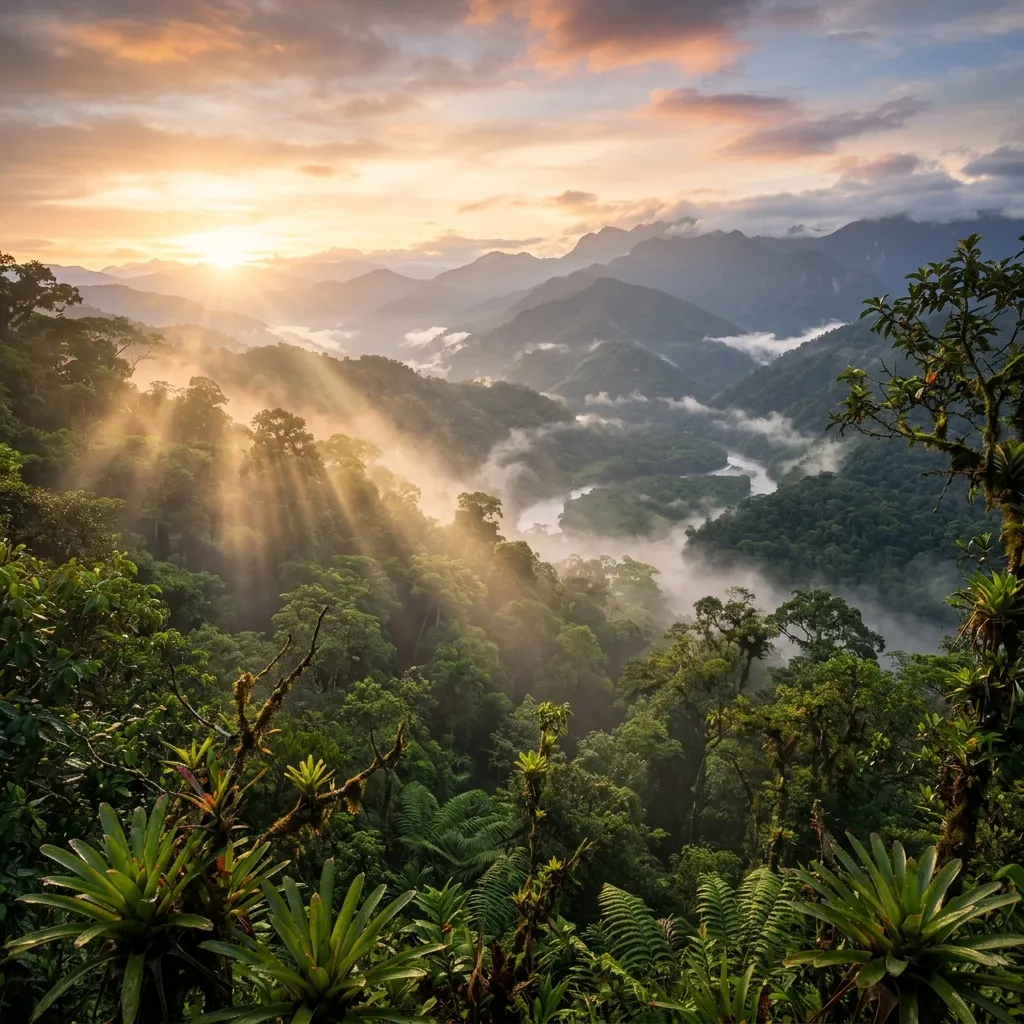
Because Machu Picchu sits at the dramatic ecological bend where the Urubamba River plunges into the humid lower cloud forest (2,040–2,430 m), the lush gardens of Inkaterra Machu Picchu Pueblo Hotel, the railway walk to Mandor Waterfall, and the agricultural terraces of the Citadel itself teem with subtropical birds.
Two Peruvian endemics take center stage here: the Inca Wren (Pheugopedius eisenmanni)—a boldly barred, chestnut-backed wren that duets loudly from Chusquea bamboo tangles right along the Aguas Calientes river walk—and the Green-and-white Hummingbird (Elliotomyia viridicauda), which visits flowering shrubs inside the Citadel and town gardens alongside the Chestnut-breasted Coronet, Booted Racket-tail, and Collared Inca. Scanning the roaring rapids of the Vilcanota-Urubamba River from the train tracks guarantees pairs of Torrent Duck (Merganetta armata) and White-capped Dipper, while the granite cliffs just outside Aguas Calientes host displaying male Andean Cocks-of-the-rock.
Abra Málaga Pass: Quest for the Critically Endangered Royal Cinclodes
Rising above the Sacred Valley to 4,316 meters (14,160 ft), Abra Málaga is one of South America's most famous high-Andean birding passes. A morning walk into the mossy, papery-barked Polylepis (Queñua) groves at Canchayoc or Tastayoc targets the planet's most sought-after ovenbird: the Critically Endangered Royal Cinclodes (Cinclodes aricomae), with fewer than 250 mature individuals remaining globally.
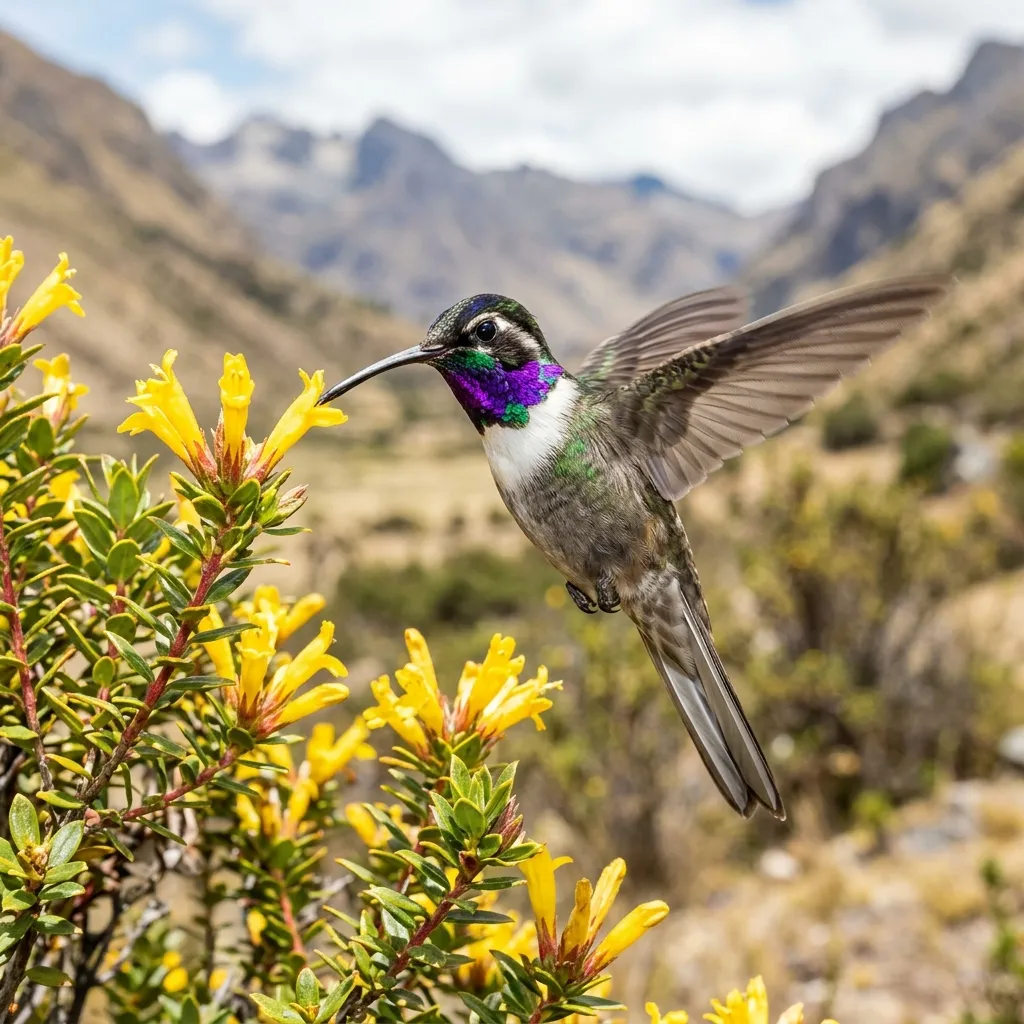
These same high-altitude Polylepis patches hold a remarkable suite of Polylepis specialists: Ash-breasted Tit-Tyrant, Tawny Tit-Spinetail, Giant Conebill, Thick-billed Siskin, and the endemic White-tufted Sunbeam (Aglaeactis castelnaudii). Lower down on the humid Carrizales slope (3,300–3,600 m), birders track the endemic Cuzco Brushfinch, Parodi's Hemispingus, Urubamba Antpitta, and Plushcap.
Frequently Asked Questions
What endemic birds can you see at Machu Picchu and Aguas Calientes?
The signature endemic birds of Machu Picchu and Aguas Calientes are the Inca Wren (Pheugopedius eisenmanni), Green-and-white Hummingbird (Elliotomyia viridicauda), Masked Fruiteater (Pipreola pulchra), and Cuzco Warbler, alongside cloud forest stars like the Andean Cock-of-the-rock, Golden-headed Quetzal, and Torrent Duck.
How do you combine Machu Picchu birding with a Manu National Park tour?
We recommend spending 3 days prior to your Manu tour acclimatizing in the Sacred Valley (2,800 m) and Aguas Calientes (2,040 m)—birding Huacarpay Lake, Abra Málaga, and Mandor Gardens—before departing Cusco over Acjanaco Pass into Manu fully acclimatized.
Where can I see the Bearded Mountaineer and Chestnut-breasted Mountain-Finch near Cusco?
Both Peruvian endemics can be seen within 45 to 90 minutes of Cusco: the Bearded Mountaineer is common feeding on Nicotiana flowers at Huacarpay Lake and Peñas (below Abra Málaga), while the Chestnut-breasted Mountain-Finch inhabits thorny scrub around Ollantaytambo and Sacsayhuamán.
Do I need a special ticket to birdwatch along the Mandor Road in Aguas Calientes?
No Machu Picchu citadel ticket is required to bird the lower Urubamba River road and Mandor Valley outside Aguas Calientes—only a modest private trail entry fee (~30 PEN / $8 USD) at the Mandor Botanical Gardens gate.
References & Scholarly Citations
- Walker, B. (2015). Field Guide to the Birds of Machu Picchu and the Cusco Region, Peru. Nationalizado / Fundacion Backus.
- Engblom, G., & Aucca, C. (2024). Conservation of Polylepis Woodlands and Royal Cinclodes (Cinclodes aricomae) at Abra Málaga, Cusco. ECOAN.
- eBird Hotspot Database (2026). Aguas Calientes / Machu Picchu Historical Sanctuary Checklist.
Ready to Spot These Species?
Our custom birdwatching expeditions in Peru are designed for serious list keepers, photographers, and nature lovers alike. Join our small groups guided by top Peruvian ornithologists.
Inquire About Our Tours