Introduction
The Manu Biosphere Reserve holds the world record for the highest concentration of bird species in a single protected area, with over 1,000 species documented [1]. This incredible species richness is the result of the park's dramatic altitudinal gradient, which spans from high Andean puna grasslands down through lush cloud forests to the vast lowland Amazon basin, creating a series of distinct habitats.
High-Altitude Andean Zone Checklist (3,000m - 4,000m)
Starting at the high-altitude entrance of the park near Acjanaco Pass, birders transition through grasslands and dwarf elfin forest. Key target species include:
• Tinamidae: Puna Tinamou
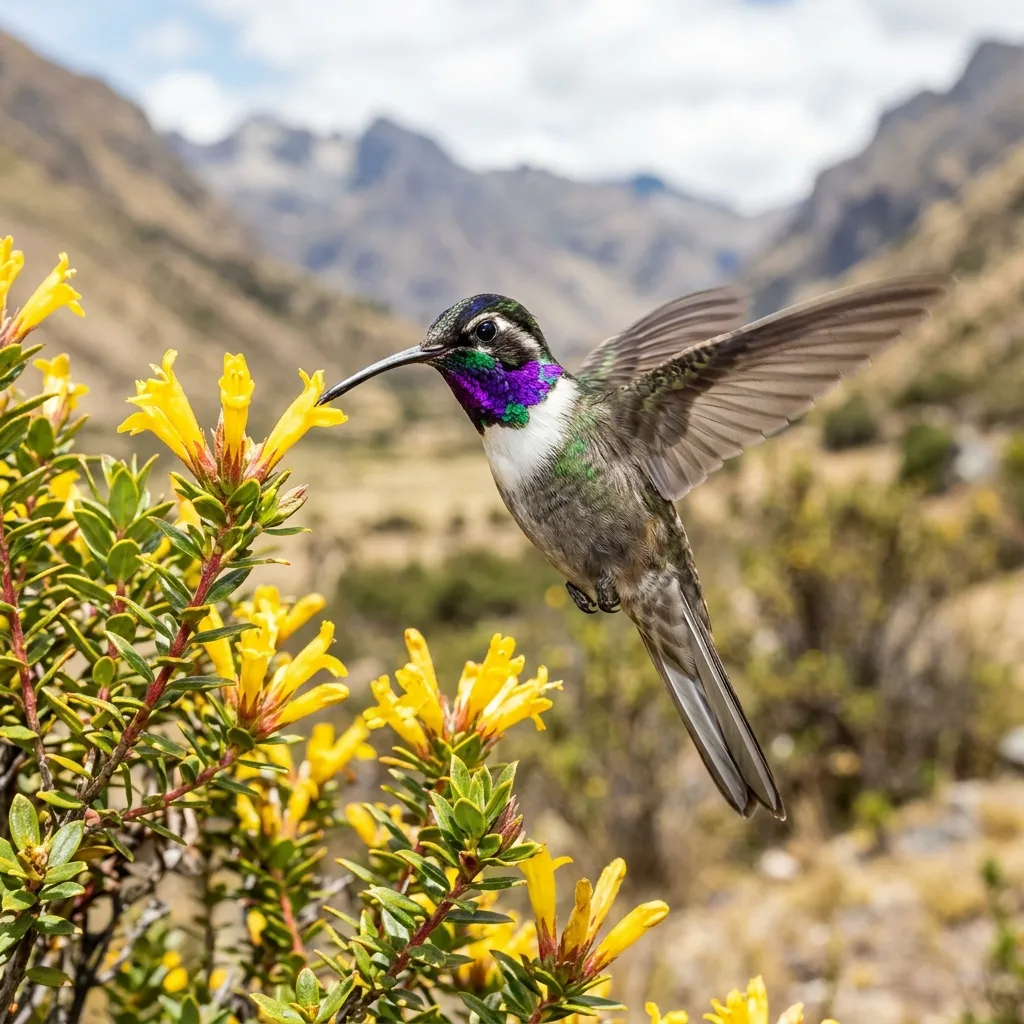
• Trochilidae: Bearded Mountaineer (endemic), Bronze-tailed Comet, Tyrian Metaltail
• Thraupidae: Hooded Mountain-Tanager, Golden-collared Honeycreeper, Tit-like Dacnis
• Tyrannidae: Black-billed Shrike-Tyrant
• Falconidae: Mountain Caracara
Cloud Forest Zone Checklist (1,200m - 3,000m)
The humid slopes of the eastern Andes are filled with mist, orchids, and high bird activity. Key target species include:
• Cotingidae: Andean Cock-of-the-rock (national bird), Amazonian Umbrellabird, Red-crested Cotinga
• Trogonidae: Golden-headed Quetzal, Masked Trogon
• Ramphastidae: Blue-banded Toucanet, Hooded Mountain-Toucan
• Trochilidae: Booted Racket-tail, Gould's Jewelfront, Sword-billed Hummingbird
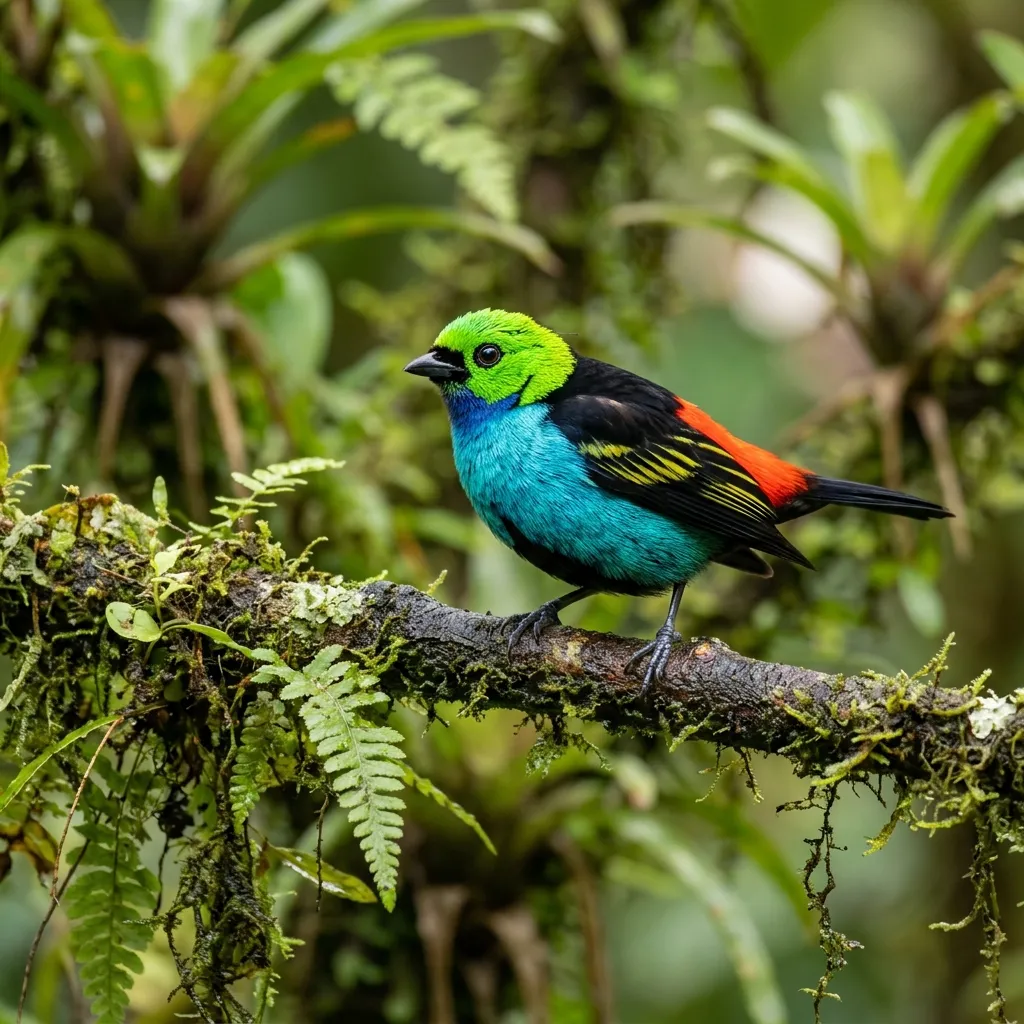
• Thraupidae: Paradise Tanager, Saffron-crowned Tanager, Grass-green Tanager
Lowland Rainforest Zone Checklist (150m - 1,200m)
The flat Amazonian floodplains harbor the greatest species density, from canopy towers to forest floors. Key target species include:
• Accipitridae: Harpy Eagle, Crested Eagle, Ornate Hawk-Eagle
• Psittacidae: Scarlet Macaw, Blue-headed Macaw, Red-and-green Macaw
• Opisthocomidae: Hoatzin (prehistoric leaf-eater)
• Ardeidae: Agami Heron, Capped Heron, Rufescent Tiger-Heron
• Neomorphidae: Rufous-vented Ground-Cuckoo
• Pipridae: Band-tailed Manakin, Round-tailed Manakin
Tips for Compiling Your Target List
To prepare for a Manu expedition, we recommend reviewing recent eBird checklists for hotspots like San Pedro Cloud Forest and Blanquillo. Keep a separate target list for each altitudinal zone, as most birds have strict elevational ranges [2]. Work with professional guides who use audio playback and vocalizations to identify skulking species like antbirds, woodcreepers, and spinetails in the dense understory.
References & Scholarly Citations
- Schulenberg, T. S., et al. (2010). 'Birds of Peru'. Princeton University Press.
- eBird (2026). 'Birding Hotspot: Parque Nacional del Manu'. Cornell Lab of Ornithology.
- Plenge, M. A. (2025). 'Checklist of the Birds of Peru'. Union of Peruvian Ornithologists.
- Stotz, D. F., et al. (1996). 'Neotropical Birds: Ecology and Conservation'.

Ready to Spot These Species?
Our custom birdwatching expeditions in Peru are designed for serious list keepers, photographers, and nature lovers alike. Join our small groups guided by top Peruvian ornithologists.
Inquire About Our Tours